

 Tiếng Việt
Banh Phong Sua Mekong Delta – A Sweet, Chewy Snack to Bring Home
Bánh phồng sữa is a name commonly used for a group of thin, sweet snacks from the Mekong Delta. Many versions have a rich coconut or milk flavor and are packaged as ready-to-eat snacks or regional food gifts.
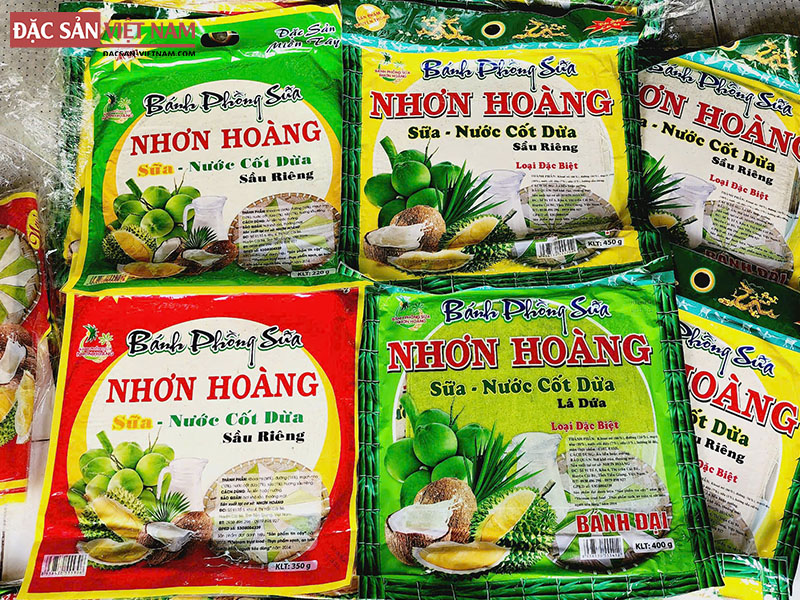
The names bánh phồng sữa and bánh tráng sữa are sometimes used quite loosely by different producers. More importantly, there is no single standard recipe: the starch base, coconut, milk, sugar, malt syrup and added flavors can vary considerably.
Are Banh Phong Sua and Banh Trang Sua the Same Thing?
In everyday selling and labeling, the two names may overlap and can even be used interchangeably for some products. However, thickness, chewiness, production method and intended use can differ from one producer to another.
Some versions are soft and chewy and are designed to be eaten directly from the package. Others may also be heated or toasted to change their texture. The preparation instructions on the actual package should therefore take priority.
Which Part of the Mekong Delta Is Banh Phong Sua Associated With?
Banh Phong Sua is found in different parts of the Mekong Delta, so it is difficult to treat the snack as belonging exclusively to one locality.
One area where the craft is clearly documented is Cai Be. Local tourism materials mention the traditional craft of making and rolling milk-based sheets alongside other village industries around Cai Be and Dong Hoa Hiep.
Following Vietnam’s 2025 administrative reorganization, Cai Be is now part of the new Dong Thap Province. Older references and product identities may still use the familiar Cai Be–Tien Giang place-name.
Is Banh Phong Sua Made from Glutinous Rice or Cassava?
It depends on the product. It would be inaccurate to assume that every version of Banh Phong Sua is based on glutinous rice flour.
Nhon Hoang, a producer associated with the Cai Be area, lists cassava among the main ingredients of its Banh Phong Sua, together with sugar, malt syrup, coconut milk, milk and other ingredients depending on the variety.
Durian and Pandan – Two Very Different Flavor Profiles
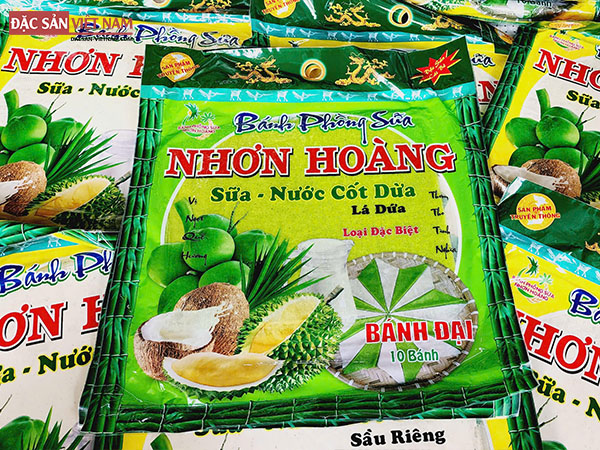
The exact taste depends on each producer’s recipe. These two products illustrate how noticeably different two Banh Phong Sua varieties can be.

How Is Banh Phong Sua Made?
The exact production method differs by producer. In general, the starch base is prepared and mixed with sweetening and flavoring ingredients such as sugar, malt syrup, coconut milk or dairy ingredients according to the producer’s formula.
The mixture is then cooked, rolled or formed into thin sheets, dried to the desired level and packaged.

Do Not Judge Banh Phong Sua by Color or Thickness Alone
Thickness, chewiness, surface appearance and color can all differ according to the brand, flavor and production formula.
4 Things to Check Before Buying Banh Phong Sua
Products sharing the same name can be quite different, so check the actual package before choosing one.
Open the Package and Enjoy
Ready-to-eat versions can be enjoyed directly from the package. Their sweet, rich flavor pairs naturally with tea or coffee when served in small pieces.
Follow the Producer’s Instructions
Do not apply one fixed temperature and cooking time to every product. Different thicknesses and formulations can react differently to heat.
Explore Two More Mekong Delta Specialties
Ben Tre ·
Huynh Yen Coconut Candy →
A sweet coconut-based gift from Ben Tre.
Ca Mau ·
Banh Phong Tom Nam Can →
A savory shrimp-based gift from Ca Mau.
