
Ca Loc Nuong Trui: Mekong Delta Straw-Roasted Snakehead Fish

Mekong Delta Cuisine · Rustic Food

Ca Loc Nuong Trui – Straw-Roasted Snakehead Fish of the Mekong Delta

Cá lóc nướng trui is a rustic snakehead fish dish associated with the fields and waterways of southern Vietnam. In the traditional method, a whole fish is roasted directly with burning straw, charring the outside while the heat cooks the flesh within.

The appeal of the dish comes less from elaborate seasoning and more from contrast: smoky char on the outside, hot moist fish inside, and a generous spread of fresh herbs, rice paper and dipping sauce served alongside it.

Ca Loc Nuong Trui served with herbs and rice paper in the Mekong Delta

Ca Loc Nuong Trui is commonly enjoyed hot with fresh herbs, rice paper and dipping sauce.

A Rustic Roasting Method

What Does “Nuong Trui” Mean?

In the traditional method, the snakehead fish is usually kept whole and roasted without heavy seasoning. Burning straw provides direct, intense heat, darkening the exterior before the charred layer is cleaned away and the cooked flesh is opened for serving.

Unlike slower charcoal grilling, straw roasting uses a stronger burst of heat. The person cooking therefore needs to judge doneness according to the size of the fish, the amount of straw and the actual heat rather than relying on one fixed cooking time.

The Fish
The flesh inside stays moist and tender when the fish is cooked properly and eaten while still hot.
The Smoky Aroma
The burning straw chars the exterior and gives the dish a smoky character that differs from fish grilled slowly over charcoal.
Fresh Accompaniments
Fresh herbs, rice paper, green banana and star fruit help balance the warm fish and strongly flavored dipping sauces.

From the Fields of Southern Vietnam

A Dish Shaped by Rural Mekong Delta Life

Snakehead fish have long been a familiar food source across wetlands, canals and rice-growing areas in southern Vietnam. In a rural setting where fish, bamboo and post-harvest straw were readily available, roasting a fish directly with straw offered a practical way to prepare a meal outdoors with very little equipment.

Over time, the dish moved beyond the rice fields and became part of restaurant menus, eco-tourism experiences and regional food showcases. Today, cá lóc nướng trui is still frequently presented alongside other fish and fermented-fish dishes as part of the broader culinary identity of the Mekong Delta.
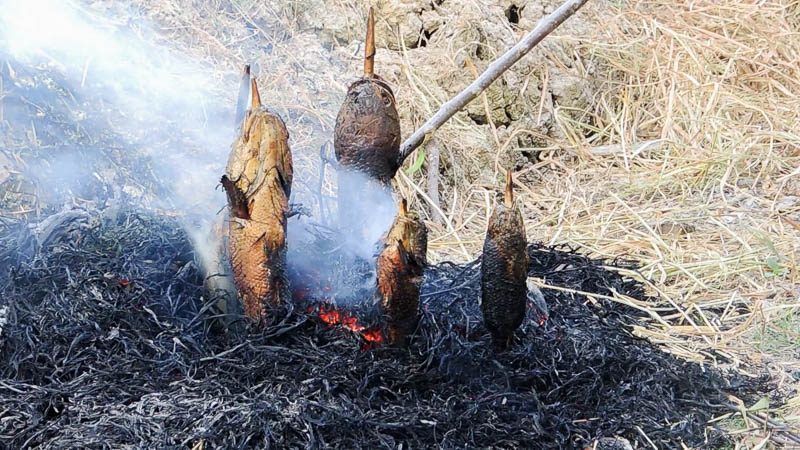
Snakehead fish roasted with straw in the traditional Nuong Trui method

Burning straw is closely associated with the traditional preparation of cá lóc nướng trui.

From Fish to Table

How Is Traditional Ca Loc Nuong Trui Prepared?

Methods can vary between families and localities, but the basic idea remains the same: cook the whole fish with direct heat while keeping seasoning before roasting to a minimum.

Traditional Process
01 · Keep It Simple
The fish is traditionally roasted without heavy seasoning so the flavor of the cooked flesh remains central.
02 · Roast with Straw
Dry straw is arranged around the fish and burned to create strong direct heat around the exterior.
03 · Check for Doneness
Do not rely on a fixed number of burns. Fish size, the amount of straw and wind conditions can all affect cooking time.
04 · Remove the Charred Exterior
Once the fish is fully cooked, the heavily charred exterior is cleaned away before the flesh is opened and served.

If You Try Straw Roasting at Home
Straw roasting should only be attempted in a safe outdoor area away from easily combustible materials, with a reliable way to extinguish the fire nearby. More importantly, check that the thickest part of the fish is fully cooked before eating; the charred skin alone does not indicate that the flesh inside is done.

How to Enjoy It

What Is Served with Ca Loc Nuong Trui?

A serving of cá lóc nướng trui is rarely just fish. Fresh greens, rice paper, tart or slightly astringent fruit and dipping sauces are an important part of the overall meal.
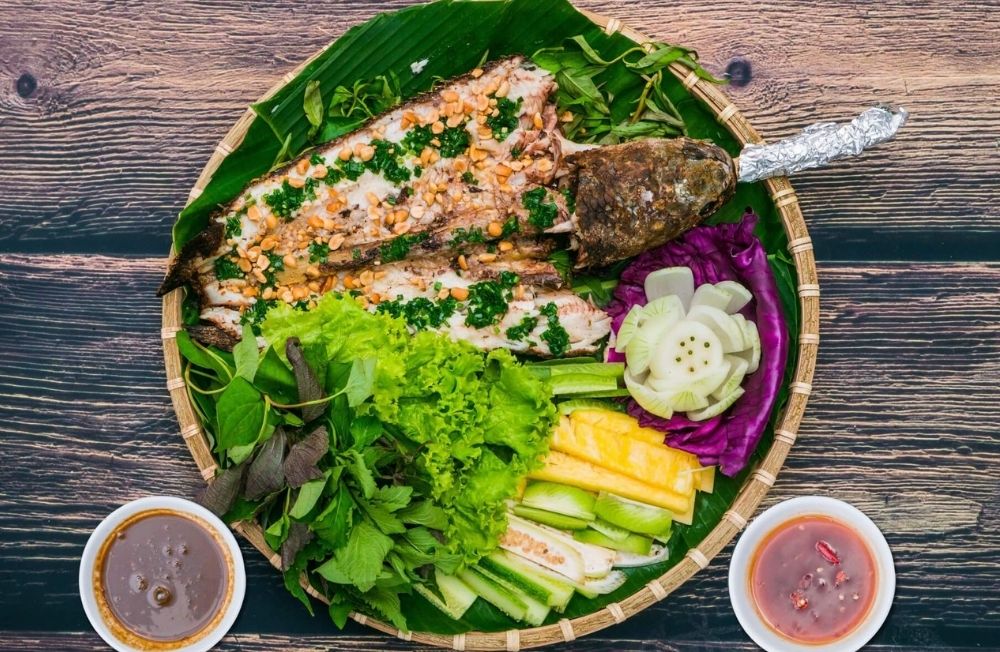
Herbs & Rice Paper
Lettuce, Vietnamese herbs, fish mint, cucumber, green banana and star fruit are common accompaniments.
Dipping Sauce
Depending on the place and personal preference, the fish may be served with sweet-sour fish sauce, tamarind sauce, fermented fish sauce or another salty and spicy dip.
Eat It Hot
The flesh is easier to separate and retains its moisture best when the fish is enjoyed soon after roasting.

Finished Ca Loc Nuong Trui from the Mekong Delta

The fish is typically opened and shared with herbs, rice paper and a dipping sauce suited to local taste.

A Dish Made for Sharing

Why Is Ca Loc Nuong Trui So Closely Associated with the Mekong Delta?

The dish brings together several elements strongly associated with rural life in the delta: freshwater fish, rice straw, garden herbs, rice paper and communal eating. That combination is one reason cá lóc nướng trui frequently appears in countryside and eco-tourism food experiences across southern Vietnam.

Today it may be served in restaurants with more polished presentation, but the core experience remains simple: a whole roasted fish placed at the center of the table and shared with fresh accompaniments.

Explore Mekong Delta Food
From Rustic Roasted Fish to the Delta’s Richer Flavors
Ca Loc Nuong Trui represents one of the simpler countryside food traditions of the Mekong Delta. Other regional dishes take a very different direction, from fermented-fish hotpots to noodle soups shaped by the culinary traditions of different communities across southern Vietnam.

Leave a Reply

Your email address will not be published. Required fields are marked *